
Maria AnastasiouEvents & Customer Marketing Lead

2025 settled whether voice AI works in production.
In 2026, the question shifts to where it holds up (and thrives) under pressure - and where it breaks.
We spoke to customers across healthcare, contact centers, live media, developer platforms, and regulated enterprise.
These are environments where accuracy failures cascade, latency compounds, and mistakes have real-world consequences.
Here's what they're seeing.
Clinical conversations at Edvak flow directly into Electronic Health Records (EHRs) without a transcription step. Speech recognition triggers tasks, routes referrals, populates coding support. The entire downstream automation chain depends on it.
"By 2026, we see Voice AI becoming healthcare infrastructure, not a transcription feature.
At Edvak, Darwin AI turns real-time clinical conversations into structured, audit-ready notes and triggers the next steps inside the EHR, from tasks and follow-ups to referrals, care coordination and coding support.
That only works when speech understanding is dependable in real clinical conditions and Speechmatics is the accuracy layer that helps us capture critical meaning, including negations and medication names, so downstream automation remains trustworthy at enterprise scale." Vamsi Edara, Founder & CEO, Edvak Health.
Infrastructure demands total reliability. Weak accuracy collapses the system.
"In 2025, voice AI moved from demos to production, taking off in low-stakes use cases like scheduling and basic support. The next shift is toward high-stakes, deeply personal interactions as models improve. With every new system, we unlock more complex use cases.
In 2026, that momentum continues—especially with speech-to-speech models. Cascading and speech-to-speech will coexist, each serving different needs, and both are advancing fast. It's an incredibly exciting time to be building in voice AI." James Zammit, Co-Founder, Roark.
Demos show what's possible.
Production shows what holds under pressure.
The complexity compounds.
Speech recognition, translation, reasoning, and synthesis must operate together with predictable performance. Systems need to maintain consistent latency under load, fail gracefully when components degrade, and prioritize safety throughout.
Live translation moved from concept to credible possibility in 2025.
Organizations across broadcast, enterprise, government, and live events ran evaluations and began early deployments.
"2025 has been the year where live AI voice translation moved from concept to credible possibility. We're seeing organizations across broadcast, enterprise, government, and live events kick the tyres, run serious evaluations, and begin early deployments as they explore how real-time multilingual engagement could transform their workflows. The excitement is there, the quality signals are strong, and the foundations for broader adoption are now clearly taking shape.
Looking ahead to 2026, we expect the real shift to come from operationalization. This is when speech recognition, translation and natural-sounding AI voices will mature into a single seamless workflow, where orchestration and near-zero latency matter more than standalone feature demos.
When these technologies work as one, content becomes instantly understood in any language - the moment it's spoken - unlocking borderless reach, standardized accessibility, and truly global audiences." Bill McLaughlin, Chief Product Officer, AI-Media.
Contact centers prepared for multilingual as a checkbox feature. Production revealed it as fundamental to how humans actually communicate. Translation stops being a premium feature. It becomes infrastructure for inclusive service delivery.
"Historically, contact centers treated multilingual support as a checkbox feature.
However, real-world deployment has demonstrated that language accessibility is fundamental to how people naturally communicate.
As a result, translation is shifting from a premium add-on to a core offering for an inclusive customer experience." Martin Taylor, Deputy CEO and Co-Founder, Content Guru.
Across the Nordics, production systems handle Finnish, Swedish, Norwegian, and Danish within the same conversation.
The accuracy challenge isn't language recognition but preserving intent as speakers move between languages naturally. When systems handle code-switching naturally, speakers stop adapting to the technology.
"I think especially in the multilingual space, being able to have a model that understands more than one language simultaneously allows the person speaking to be more native with how they speak and really speak the way they think instead of needing to translate.
There's a built-in translation layer that the person's doing. That ease really allows for information and intent to travel a lot easier." Vik Singh, Co-Founder & CEO, Mixhalo.
"We're going to see more advanced voice AI architectures, with teams increasingly building voice agents in-house. Through 2026, cascaded systems will remain dominant because they offer unmatched controllability.
At the same time, we'll see more real-time, parallel approaches—models talking to each other, running background processes, and moving beyond a simple STT-to-LLM-to-TTS pipeline." Brooke Hopkins, Founder, Coval.
Teams want more control over their voice stacks, not less.
Controllability matters because production environments expose edge cases no demo anticipated.
Teams need to tune, test, and trust every component.
Accuracy will be table stakes by 2026.
What separates platforms is everything that comes after accuracy. Summarization, escalation, and context transfer will define successful deployments. Fully autonomous flows get headlines. Human-AI collaboration gets renewed contracts.
"By 2026, voice AI will hit unprecedented accuracy, but the real battleground will be safety, latency, and enterprise readiness. Expect a lot of noise, flashy demos, sub-second claims, speech-to-speech hype—but only a few players will deliver the safeguards and reliability businesses actually need.
The winners will be the ones who turn voice tech into truly personalized, human-centered experiences." Samantha Rosendorff, VP Global Pre-Sales, Boost.ai.
2026 isn't about proving voice AI works. That question got answered.
The teams building for 2026 are optimizing for reliability under pressure, because that's what unlocks the next wave of adoption.
Speechmatics in 2025: The numbers that shaped Voice AI's breakthrough year (+
Why AI-native EHR platforms will treat speech as core infrastructure in 2026
Speechmatics and Boost.ai partner to power enterprise Voice AI for Europe's
AI-first hype gives way to reality: New Speechmatics report reveals what’s


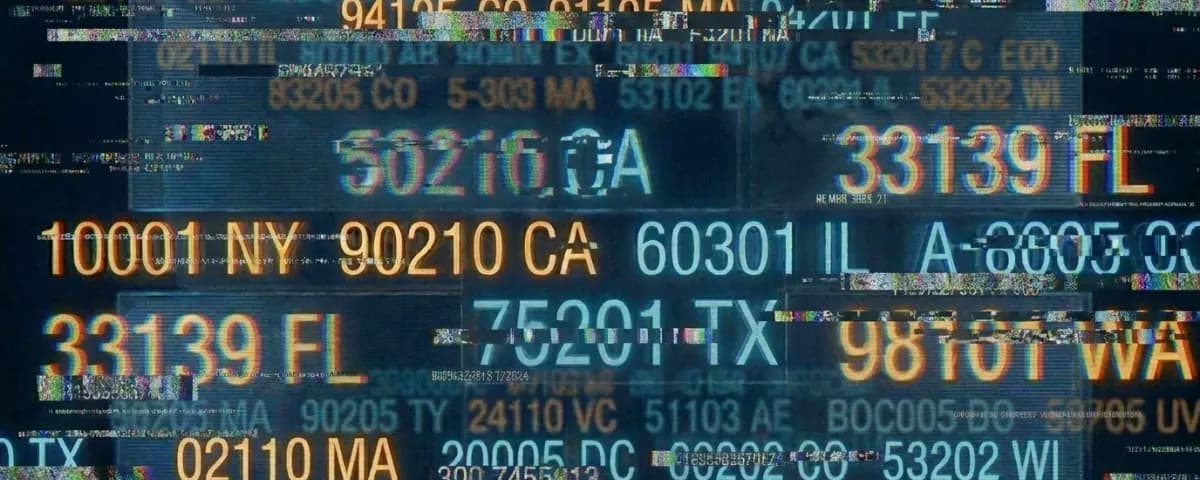
A guide for voice AI engineers, ecommerce platforms and warehouse teams on SKU recognition accuracy voice assistant deployments depend on: why speech recognition systems produce transcription errors on product codes, what to measure when error rates matter, and the fixes that move the needle on order picking, voice ordering and customer-facing voice AI.

Behind the build: what it takes to make cloud-grade speech recognition work inside Adobe Premiere, and why Whisper raised the stakes.

Adobe Premiere users can run the most accurate on-device transcription locally; efficient enough for a laptop, powerful enough for professional work.
Speech-to-text has moved from novelty to enterprise infrastructure. Here's how the leading platforms stack up in 2026 — and how to pick the right one.
The joint platform returns transcription and health signals in real time, with no additional hardware required.
![[alt: Concentric circles radiate outward from a central orange icon with a white Speechmatics logo. The background is dark blue, enhancing the orange glow. A thin green line runs horizontally across the lower part of the image.]](/_next/image?url=https%3A%2F%2Fimages.ctfassets.net%2Fyze1aysi0225%2F4jGjYveRLo3sKjzBzMIXXa%2F11e90a40df418658e9c15cb1ecff4e4b%2FBlog_image-wide-carousel.webp&w=3840&q=75)
What “fast” actually means for voice agents — and why Pipecat’s TTFS + semantic accuracy is the clearest benchmark we’ve seen.

